
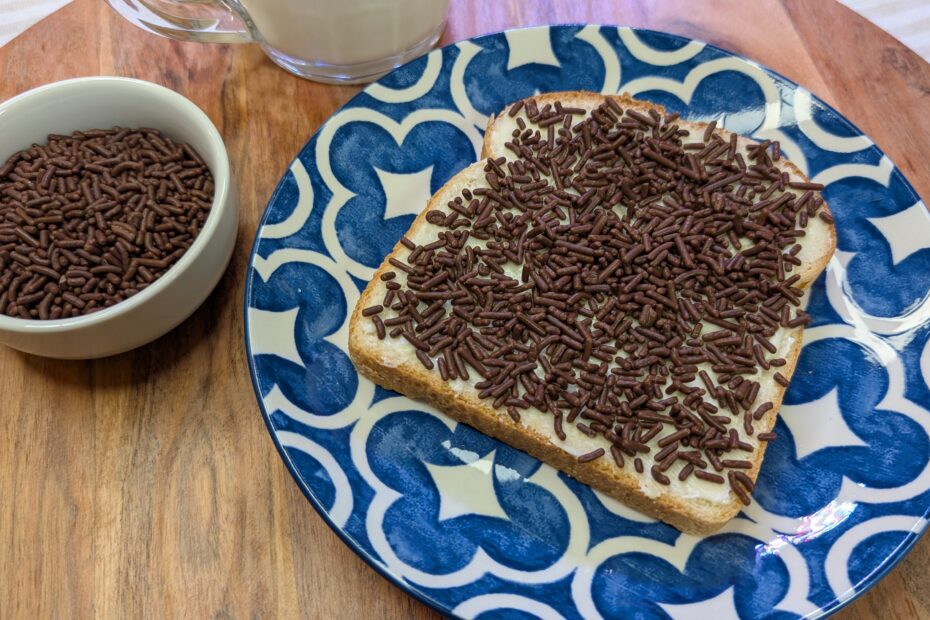
A Dutch Classic That’s Basically Chocolate for Breakfast


Hagelslag on Bread
Equipment
- Normal Kitchen Utensils
Ingredients
- 2 Slices Soft White or Wheat Bread
- 2-3 Tbsp Butter Softened
- 2-4 Tbsp Hagelslag (Chocolate Sprinkles)
Instructions
- Generously butter one side of each slice of bread. Go all the way to the edges.2 Slices Soft White or Wheat Bread, 2-3 Tbsp Butter
- Sprinkle half the hagelslag (sprinkles) over each slice of bread. You can tilt the slices to help distribute the sprinkles evenly to the edges.2-4 Tbsp Hagelslag (Chocolate Sprinkles)
- Gently press the sprinkles into the butter to help them stick. You can shake of the excess if you like, but why would you?
- Enjoy! Don't cut the slice. But you can fold it in half if you would like. It goes great with a glass of cold milk.
Hagelslag: A Sweet Slice of Dutch Childhood
Hagelslag on bread is simple and nostalgic—even if you didn’t grow up in the Netherlands. Hagelslag (which translates to “hailstorm” in Dutch, because the sprinkles resemble tiny pieces of hail) is one of the most beloved breakfast and snack traditions in Dutch homes. Imagine opening your pantry and grabbing a box of chocolate sprinkles, not for cupcakes, but for breakfast. That’s Hagelslag.
This isn’t just a kid’s treat—though Dutch kids do love it. Adults eat it regularly too. You’ll find it served in households across the Netherlands, often with a cold glass of milk. All you need is fresh white bread, a smear of real butter (softened to room temp is best), and your sprinkles of choice.
A Little History of Hagelslag on Bread
The first version of Hagelslag was invented in the 1930s by a Dutch company called Venz. They started with anise-flavored sprinkles before adding chocolate ones, which quickly became the most popular. The chocolate versions include milk (melk hagelslag), dark (puur hagelslag), and white chocolate (wit hagelslag). You can even find fruit-flavored varieties, but chocolate is still the undisputed favorite.
Hagelslag isn’t just about taste—there’s a cultural memory baked into every bite. For many Dutch people, it’s comfort food, just like peanut butter and jelly might be for Americans. It’s easy, affordable, and has stayed popular for decades. Today, Dutch grocery stores dedicate whole sections to these sprinkles, and yes, they really do call them Hagelslag.
Hagelslag vs. Fairy Bread: A Sweet Showdown
If Hagelslag on bread reminds you of Fairy Bread from Australia and New Zealand, you’re not alone. Both are simple recipes involving sprinkles and bread, but there are a few key differences. Fairy Bread usually uses hundreds and thousands (small rainbow-colored round sprinkles) on white bread with a light spread of margarine or butter. It’s mostly reserved for kids’ birthday parties.
Hagelslag, on the other hand, is part of everyday life. It’s not just for special occasions—it’s an accepted breakfast food. And the sprinkles are typically chocolate, not rainbow. So, while they might look similar from afar, they’re quite different in practice. Hagelslag is rooted in tradition, not just party vibes.
Looking for Another Sweet, Bread-Based Breakfast?
If Hagelslag got you craving more sweet slices in the morning, check out my recipe for Stuffed French Toast. It’s rich, cozy, and definitely a little extra. Perfect for weekends when you want to go beyond the basics.
Some text generated/edited with the help of ChatGPT | OpenAI: https://www.openai.com/
Its like you read my mind! You seem to know a lot about this, like you wrote the book in it or something.
I think that you could do with a few pics to rive the message home a bit, but other than that, this is excellent blog.
An excellent read. I will certainly be back.
Could the popularity of Hagelslag on Bread in Dutch culture inspire a global breakfast revolution?