The German Classic That Inspired America’s Hamburger
Early 1800s Hamburg, Germany
Authentic Hamburg Steak
Equipment
- Normal Kitchen Utensils
Ingredients
For the Steaks
- 1 Lb Minced or Ground Beef Traditionally minced or hand-chopped sirloin or round – but you can use ground beef too
- 1 1 oz. Slice Day-Old White Bread
- 1/4 C Milk
- 1 Small Onion You can (Optionally) make it a medium onion and use half for the gravy
- 1 Egg
- 1 tsp Salt
- 1/2 tsp Pepper
- 1/4 tsp Nutmeg
- 1 Tbsp Butter or Lard
For the Gravy
- 1 Tbsp Butter or Reserved Drippings
- 1 Tbsp Flour
- 1 C Beef Broth Go for low-sodium
- 1 tsp Coarse Ground Mustard (Optional) but I like it
- Salt and Pepper to Taste
Instructions
- Tear the bread into small pieces and add it to a large mixing bowl. Mix it with the milk to combine, and mash it with a fork until smooth.1 1 oz. Slice Day-Old White Bread, 1/4 C Milk
- Finely mince or grate the onion into the same bowl. Note: if using extra onion for the gravy, quarter the extra onion and slice it thin.1 Small Onion
- Add the egg, salt, pepper, nutmeg and beef to the same bowl and mix to combine. The texture will be soft, especially if you grated the onion, but it should hold together.1 Lb Minced or Ground Beef, 1 tsp Salt, 1/2 tsp Pepper, 1/4 tsp Nutmeg, 1 Egg
- Melt the butter or lard in a large skillet over medium-high heat.1 Tbsp Butter or Lard
- Divide the meat mixture into fourths and form each quarter into an oval-shaped patty. Aim for a roughly 3/4 inch thickness.
- Add the patties to the skillet and cook 4 minutes each side – until nicely browned.
- Remove the cooked patties from the skillet and keep warm.
- Reserve 1 Tbsp of the pan drippings in the skillet (if necessary, add the 1 Tbsp butter). If using extra onion for the gravy, add it now and cook for 2-3 minutes to soften.1 Tbsp Butter or Reserved Drippings
- Add the flour to the dripping and stir to remove clumps. Cook for 2-3 minutes to get some color on the flour.1 Tbsp Flour
- Add the broth to the skillet about 1/4 C at a time. Stir to combine with the flour, being sure to scrape up any cooked bits from the skillet. A whisk is useful here.1 C Beef Broth
- Continue adding the broth until it is all mixed in. Bring to a simmer and season with salt, pepper and the (optional) mustard.1 tsp Coarse Ground Mustard, Salt and Pepper to Taste
- If necessary, you can add the steaks back to the gravy to warm through. Note: make sure to get the internal temperature of the meat to 160°F, per the USDA.
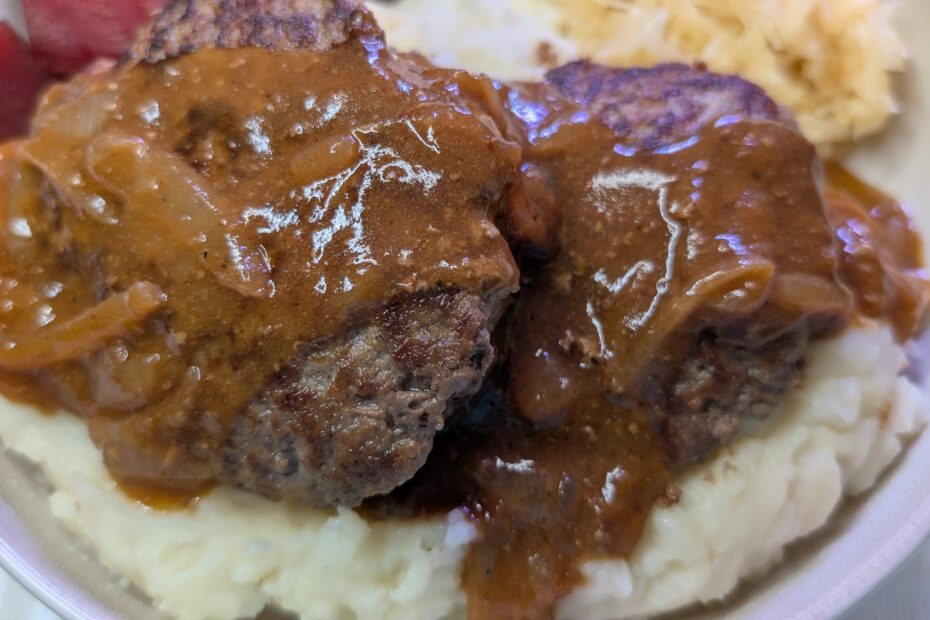
- Serve the steaks topped with the gravy. They are great with mashed potatoes, sauerkraut and beets!
The Story Behind the Hamburg Steak
This Hamburg Steak recipe (not hamburgER steak) is an ode to the timeless dish that bridges the gap between German tradition and American comfort food. Originating in Hamburg, Germany in the early 19th century, it started as a simple, hearty meal for sailors and dockworkers. Local butchers would finely mince or hand-chop quality beef, season it lightly, and form it into oval patties. Served with rich brown sauce, potatoes, and pickled vegetables, the Hamburg Steak quickly became a city favorite.
When German immigrants brought the dish to America in the mid-1800s, it evolved. U.S. cooks began serving it between slices of bread for convenience—especially in busy port cities like New York. That small change set the stage for one of the most iconic foods in history: the hamburger. Over time, the Hamburg Steak also inspired dishes like Salisbury Steak, which became an American comfort food classic during the early 20th century.
A Classic German Dish That Lives On
At its heart, Hamburg Steak is pure comfort food: ground beef shaped like a steak, seasoned simply, and pan-fried until browned and juicy. It’s traditionally served with brown gravy, buttered potatoes, and a side of pickled cucumbers or beets. The soft texture and deep beef flavor make it incredibly satisfying.
One secret to achieving that authentic texture lies in the soaked bread. Instead of breadcrumbs, a slice of white bread is soaked in milk until soft, then mixed into the meat. This classic German technique gives the patty its signature tenderness.
Another key detail is the grated onion. It blends evenly into the beef, keeping the mixture moist and flavorful without overpowering the taste. The onion’s natural juice helps the meat stay juicy, especially when paired with the bread and egg binder. The result? A steak that’s rich, tender, and perfectly old-world.
From Hamburg to Japan – and Beyond
While Hamburg, Germany gave the world its first Hamburg Steak, Japan later embraced and reinvented it as “Hambāgu.” This Japanese-style Hamburg Steak became a comfort food staple in homes and restaurants alike, often served with demi-glace and rice instead of potatoes. It’s a testament to how far this dish has traveled—and how beloved it remains across cultures.
Whether you serve it the old-fashioned German way with gravy and potatoes or the Japanese way with rice, this dish will always feel like home on a plate.
If you loved this Hamburg Steak Recipe, check out my Salisbury Steak recipe next—it’s like the American cousin of this classic dish. And if you’re looking for the perfect side, try my simple buttered potatoes or crack mashed potatoes for a meal that’s hearty, historic, and 100% delicious.
*Food Safety Note:
Always handle and cook animal products safely.
- Cook poultry (chicken, turkey, duck) to 165°F / 74°C.
- Cook ground meats (beef, pork, lamb, veal) to 160°F / 71°C.
- Cook whole cuts of beef, pork, lamb, veal to 145°F / 63°C and allow to rest for 3 minutes.
- Cook fish and shellfish to 145°F / 63°C.
- Eggs should be cooked until yolks and whites are firm, or use pasteurized eggs for recipes calling for raw or lightly cooked eggs.
Consuming undercooked meat, poultry, seafood, or eggs may increase the risk of foodborne illness, especially for children, pregnant women, elderly individuals, and those with weakened immune systems. Use a food thermometer for best accuracy.
I wrote and edited this post with help from ChatGPT, based on my own tested recipe and original photography.