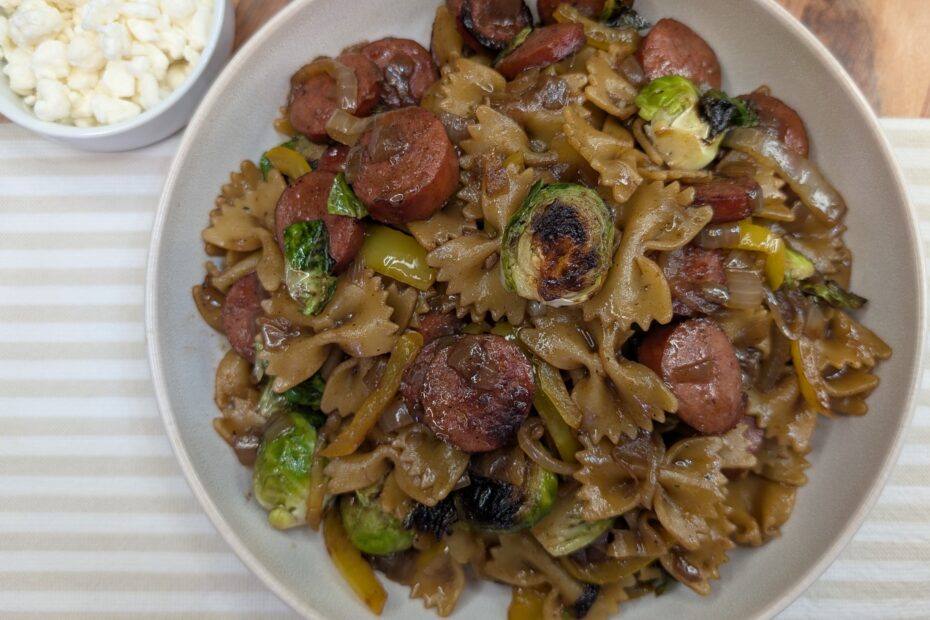
Honey Balsamic Pasta with Sausage and Crispy Brussels Sprouts
Equipment
- – Large Deep Skillet or Dutch Oven
- – Large Pasta Pot
- – Colander or Spider Strainer
- Cutting board
- Sharp Knife
- Measuring cups and spoons
- Wooden Spoon Or Silicone Spatula
Ingredients
- 1 Lb Farfalle (Bowtie) Pasta or Penne Rigate
- 1 Lb Fully Cooked Smoked Sausage Links Italian or Chicken Sausage May Be Substituted
- 12-16 Oz. Brussels Sprouts Trimmed and Halved
- 1 Very Large Yellow Onion or 2 Medium Yellow Onions
- 1 Yellow Bell Pepper Sliced into Strips
- 2-3 Tbsp Olive Oil Divided, or as Needed
- Salt and Fresh Cracked Black Pepper to Taste
- 1/2 C Balsamic Vinegar
- 4-5 Tbsp Honey to Taste, Plus More for Drizzling
- 5 Cloves Garlic Minced
- 8 Tbsp Unsalted Butter Divided (2 Tbsp for Onions, 6 Tbsp Cold for Finishing)
- Red Pepper Flakes to Taste (Optional)
Optional Garnishes
- Additional Honey for Drizzling
- 1/2-1 tsp Fresh Thyme Leaves
- 3-4 Oz. Crumbled Goat Cheese
Instructions
- Trim and halve the Brussels sprouts. Slice the yellow bell pepper into strips.12-16 Oz. Brussels Sprouts, 1 Yellow Bell Pepper
- Thinly slice one-quarter of the yellow onion into strips. Finely dice the remaining three-quarters into approximately ⅛–¼-inch pieces.1 Very Large Yellow Onion
- Heat 1–2 Tbsp olive oil in a large skillet over medium-high heat. Add the Brussels sprouts cut-side down, working in batches if necessary. Cook undisturbed for 4–6 minutes until deeply golden, then flip and cook another 3–5 minutes until tender. Season with salt and pepper, remove from the skillet, and set aside.2-3 Tbsp Olive Oil, Salt and Fresh Cracked Black Pepper to Taste
- Add the sliced sausage to the same skillet and brown over medium-high heat for approximately 5–8 minutes. During the final 4–5 minutes, add the sliced yellow bell pepper and sliced quarter-onion. Cook until the vegetables are lightly golden and the sausage is cooked through. Remove and set aside. Note: Follow package directions and verify safe internal temperatures when using raw sausage1 Lb Fully Cooked Smoked Sausage Links
- Reduce the heat to medium-low. Add the finely diced remaining onion and 2 Tbsp butter to the same pan. Caramelize for approximately 20–30 minutes, stirring occasionally, until golden, very soft, and almost jammy.8 Tbsp Unsalted Butter
- After the onions have caramelized for approximately 20 minutes, begin heating approximately 3 Qt water in a separate pot. Once boiling, salt the water (2 tsp Kosher salt or 1½ Tsp Table Salt) and add the pasta.1 Lb Farfalle (Bowtie) Pasta
- Cook the pasta according to package directions, stopping approximately 2 minutes before al dente. Continue caramelizing the onions while the pasta cooks.
- When the pasta has approximately 5 minutes of cooking time remaining, add the minced garlic to the caramelized onions. Cook for 1 minute, stirring frequently.5 Cloves Garlic
- Add the balsamic vinegar, honey, (optional red pepper flakes), and a few cracks of black pepper to the onions and garlic. Stir, scraping up the browned bits, and allow the mixture to simmer gently.1/2 C Balsamic Vinegar, 4-5 Tbsp Honey
- When the pasta is approximately 2 minutes shy of al dente, reserve at least 2 C pasta water. Transfer the undercooked pasta directly into the honey-balsamic sauce, along with 1½ C reserved pasta water.
- Cook over medium heat, tossing or stirring gently, until the pasta reaches al dente and the sauce begins to coat it. Add a little more pasta water if needed to maintain a generously sauced consistency.
- Return the sausage and vegetables to the skillet. Gently fold everything together until warmed through.
- Remove the skillet from the heat. Add the remaining 6 Tbsp cold butter, 2 Tbsp at a time, tossing or stirring thoroughly between additions until melted and incorporated. Continue until the sauce is glossy and silky.
- Taste for seasonings and additional honey. Loosen with additional reserved pasta water if necessary.
- Serve immediately, finished with an (optional) light drizzle of honey or the other garnishes.
Notes
Honey Balsamic Pasta with Sausage and Crispy Brussels Sprouts
This recipe started with a bag of frozen Brussels sprouts that I needed to use. While trying to decide what to make with them, I found myself craving crispy Brussels sprouts with lightly charred edges and a sweet honey-balsamic glaze. That sounded good on its own, but I started thinking about pairing them with some smoked sausage. Before long, the idea had grown into a full pasta dish with sausage, peppers, caramelized onions, and a rich honey-balsamic butter sauce.
Of course, after putting all that thought into using up the frozen Brussels sprouts, I decided fresh ones would give me a better crisp in the skillet. So I made a trip to the grocery store, bought a pound of fresh Brussels sprouts, and left the frozen ones in the freezer.
The result is a pasta dish that balances sweet, savory, and tangy flavors, with plenty of texture from the smoky sausage, tender pasta, and crispy Brussels sprouts
Building the Sweet and Savory Flavors
Honey and balsamic vinegar make a great combination, but I wanted this to be more than pasta tossed in a sweet glaze. The sausage provides a savory foundation, while the caramelized onions add depth and a more subtle sweetness that complements the honey.
I used smoked sausage links sliced into rounds, which add a rich, smoky flavor that pairs particularly well with the honey and balsamic. Mild or hot Italian sausage and chicken sausage are also great alternatives, depending on your preference.
The onions play two different roles in this recipe. Some are sautéed with the yellow bell pepper, providing a little texture and sweetness, while the rest are finely diced and caramelized into the sauce. Those caramelized onions add richness and body to the sauce without the need for heavy cream or flour.
The crispy Brussels sprouts bring everything together. Their lightly charred, slightly nutty flavor balances the sweetness of the honey, while their crisp edges provide a contrast to the tender pasta. Fresh Brussels sprouts work best here because they brown more readily than frozen ones, which tend to release more moisture.
What Makes the Honey Balsamic Sauce Work?
Rather than relying on cream or broth, this sauce gets its body from caramelized onions, starchy pasta water, and butter. The starch helps the sauce cling to the pasta, while cold butter added near the end creates a smooth, glossy finish.
One important detail is to avoid reducing the balsamic vinegar and honey into a thick glaze before adding the pasta. The goal is a sauce that coats the bowties generously, not a sticky reduction. The pasta water helps keep everything loose enough to toss together while still delivering plenty of flavor.
The balance of honey and balsamic can also vary depending on the vinegar you use. I recommend starting with four tablespoons of honey and adjusting to taste. A fifth tablespoon or a light drizzle over the finished dish can bring out a little more sweetness without changing the overall character of the sauce. Personally, I always add that fifth tablespoon.
Variations and Serving Suggestions
Farfalle, commonly called bowtie pasta, is my preferred shape for this recipe. Its folds catch the honey-balsamic sauce and small pieces of caramelized onion, while its shape pairs nicely with the sliced sausage and Brussels sprouts. Plus it looks fancy.
If you don’t want, or can’t find, bowtie pasta, penne rigate is another excellent option.
If you’re feeling really chef-y, try adding a few crumbles of goat cheese over the finished pasta. Its tangy flavor pairs particularly well with honey and balsamic vinegar. Fresh thyme is another optional addition, although I prefer using just a few leaves as a garnish rather than incorporating dried thyme into the sauce. This gives you an occasional hint of herbal flavor without taking attention away from the honey and balsamic.
Need a side? This is a perfect recipe to pair with a Copycat Olive Garden Salad. Or try this Simple Greek Lemon Feta Salad. If you already have goat cheese, try using that in place of the feta.
Frequently Asked Questions
Why are they called Brussels sprouts?
Brussels sprouts are named after Brussels, Belgium, where they were widely cultivated and became popular centuries ago. Although similar cabbage-like vegetables have been grown for much longer, Brussels sprouts became particularly associated with the region around Brussels. They’re actually members of the same species as cabbage, broccoli, cauliflower, and kale!
Can I use frozen Brussels sprouts instead of fresh?
Yes, but fresh Brussels sprouts are recommended for this recipe. Frozen Brussels sprouts contain more moisture after thawing, which makes it harder to develop those crispy, lightly charred edges in the skillet. If using frozen, thaw them completely and pat them as dry as possible before cooking.
Can I substitute a different type of sausage?
Absolutely! I used smoked sausage links sliced into rounds, but mild or hot Italian sausage and chicken sausage are excellent alternatives. Smoked sausage adds a rich, smoky flavor that complements the honey-balsamic sauce, while Italian sausage brings a more herbaceous flavor. Chicken sausage is a good option if you prefer something a little lighter.
What can I add to honey balsamic pasta?
For a creamier variation, try adding crumbled goat cheese, which pairs beautifully with honey and balsamic vinegar. A few fresh thyme leaves can provide occasional hints of earthy flavor without overpowering the sauce. Dried thyme is still good, but really changes the flavor. Sautéed mushrooms, red pepper flakes, or a small amount of chicken bouillon are other options for adding savory depth.
Can I make honey balsamic pasta ahead of time?
You can prepare the sausage and vegetables ahead of time, but the pasta is best finished in the sauce just before serving. The Brussels sprouts will gradually lose their crispness once mixed into the pasta. Refrigerate leftovers in an airtight container for up to 3–4 days and reheat with a splash of water to loosen the sauce.
I wrote and edited this post with help from ChatGPT, based on my own tested recipe and original photography.