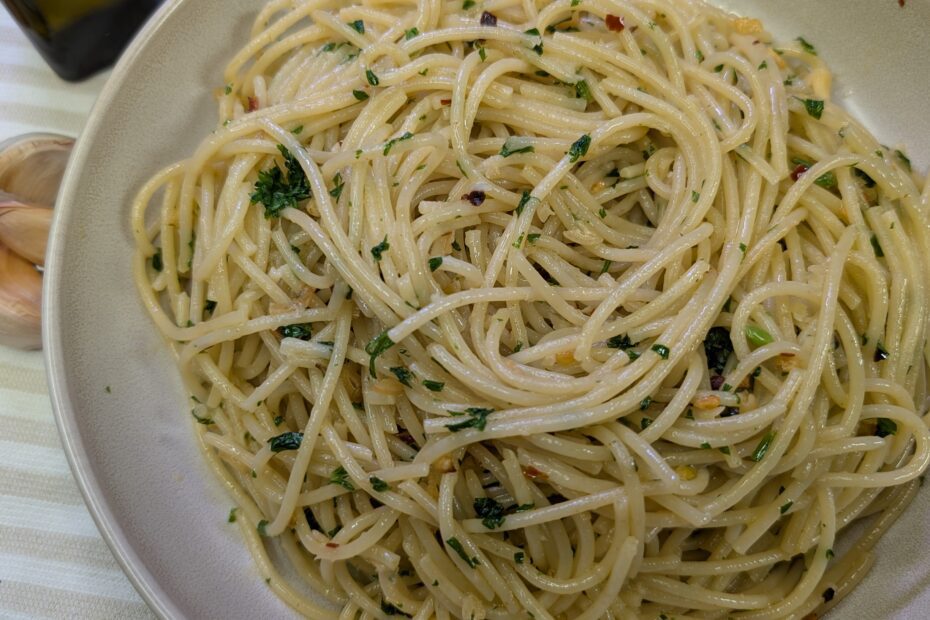
a.k.a. Spaghetti with Garlic and Olive Oil (Naples, Italy)
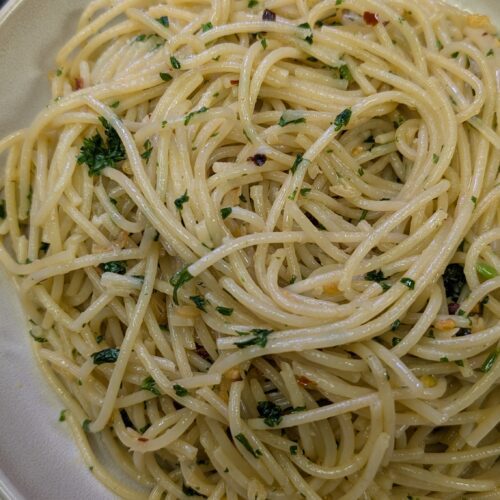
Spaghetti Aglio e Olio
Equipment
- Normal Kitchen Utensils
- Kitchen Tongs Recommended
Ingredients
- 8 Oz. Spaghetti
- 4-5 Cloves Garlic Sliced as Thin as Possible
- 1/4 C Extra Virgin Olive Oil
- 2-3 Heavy Pinches Chopped Flatleaf Parsley (Optional)
- 1/2 tsp Red Chili Flakes Plus More to Taste
- Salt For Pasta Water
- (Optional) Modern Additions
- 1/2 Lemon Zest and Juice
- 1-2 Anchovy Fillets
Instructions
- Boil water for the pasta. Since you will use the pasta water to help emulsify a sauce, you want a little less water than normal – to concentrate the starch. Use 8-10 C of water in a pot over high heat.
- While the water boils, heat the olive oil over low heat in a pan or pot large enough to toss the spaghetti in later. You will need room to jostle and stir the spaghetti to create the sauce at the end.1/4 C Extra Virgin Olive Oil
- When the water is boiling, add 3-4 tsp of table salt (or 1-1.5 Tbsp of kosher salt), reduce the heat to medium, and add your spaghetti.Salt, 8 Oz. Spaghetti
- Cook the spaghetti to about a minute before al dente (roughly 1 minute before the earliest time range on the package, which is usually 8-9 minutes).
- While the spaghetti cooks, add the garlic and chili flakes, and (optional) anchovies, to the hot oil and cook over low heat. You want to heat the garlic to a light golden color, being careful not to burn it. There should be just the faintest bubble/sizzle in the garlic.4-5 Cloves Garlic, 1/2 tsp Red Chili Flakes, 1-2 Anchovy Fillets
- Once the spaghetti is cooked, pick it straight out of the water (with kitchen tongs or a large fork) and add it to the hot oil and garlic.
- Add a splash of the pasta water (roughly 1/4 C) and stir the pasta pretty vigorously to help emulsify the pasta water and oil together.
- Continue stirring and flipping the pasta, mixing the pasta water and oil together, for 1-2 minutes until a sauce forms and thickens. If the pasta seems a little dry, add a few more tsp of pasta water as necessary and continue stirring for another minute.Note: this will be a very light sauce, and it will still generally be olive oil forward. Don't expect a perfect emulsification.
- Once the sauce is where you want it, cut the heat and mix in the parsley and (optional) lemon zest and juice to taste.2-3 Heavy Pinches Chopped Flatleaf Parsley, 1/2 Lemon Zest and Juice
- Taste for salt and red pepper and enjoy!
The Story Behind Spaghetti Aglio e Olio
If you’ve made this dish (or seen Chef), you probably already get why spaghetti aglio e olio is one of Italy’s most iconic pastas. It’s simple, comforting, and deeply flavorful—just garlic, olive oil, and pasta at its bare minimum. But behind its short ingredient list lies a dish with deep roots and even deeper opinions. Spaghetti aglio e olio was born in Naples, in the southern region of Campania. Like many southern Italian dishes, it came from necessity: people needed meals that were cheap, fast, and based on pantry staples. Enter garlic (aglio), olive oil (olio), dried chili, and spaghetti.
Aglio e olio is believed to date back to the early 19th century, though no one person is credited with inventing it. It was more of a natural evolution in home kitchens. Working-class Neapolitans often whipped it up late at night after work or socializing. In fact, many Italians still refer to it as a spaghettata di mezzanotte—a “midnight spaghetti.”
Do Italians Use as Much Garlic as Americans?
Not quite. American cooks tend to go heavy on the garlic—and I’m definitely one of them. We love it bold, punchy, and practically caramelized. Italians, on the other hand, use garlic more carefully. In many traditional Neapolitan kitchens, garlic is sliced thin (shoutout to Goodfellas) and gently toasted until golden—never brown or crispy. That soft golden garlic releases its flavor into the oil without overpowering the dish.
So while my version might lean a little more garlicky, it’s all about balance. If you’re like me and want the garlic to really sing, go for 4–6 cloves. If you’re looking for a quieter hum, scale it back to 2 or 3.
Parsley, Olive Oil, and Regional Twists
Flat-leaf parsley is sometimes added in Naples, but it’s not used everywhere. You’ll find parsley in southern Italian versions of aglio e olio, especially in Campania, where fresh herbs help brighten simple dishes. In central and northern Italy, it’s less common. The core flavors are garlic, olive oil, and chili—parsley’s just a bonus.
As for the oil? Southern Italians practically live by olive oil. It’s their default cooking fat. In northern Italy, butter shows up more often, especially in creamy pastas. That’s part of what inspired my twist on this dish—my aglio e burro, a garlic butter pasta that keeps the spirit of aglio e olio but replaces the olive oil with rich, silky butter. It’s not traditional, but it’s comforting and full of flavor.
Modern Twists: Anchovies, Lemon Zest, and Beyond
While traditional aglio e olio sticks to the basics, modern cooks (myself included) often take it further. A small anchovy fillet melted into the oil adds incredible umami without making it taste fishy. Lemon zest or a splash of juice (which I really love) brightens up the oil and adds contrast to the richness. These extras aren’t part of the classic recipe, but they’re becoming more popular in home kitchens—and they’re worth trying if you’re craving a little more depth.
If you liked this recipe and want to explore more simple, authentic Italian dishes, definitely check out cacio e pepe—it’s another brilliant example of doing more with less. And if you want to keep exploring twists on aglio e olio, don’t miss my aglio e burro version. It’s cozy, creamy, and ridiculously good.
Some content generated with the help of ChatGPT | OpenAI: https://www.openai.com/
Pingback: Mussel Pasta with Garlic Butter and White Wine - All the Munchies