(1870s to 1890s New England, USA)
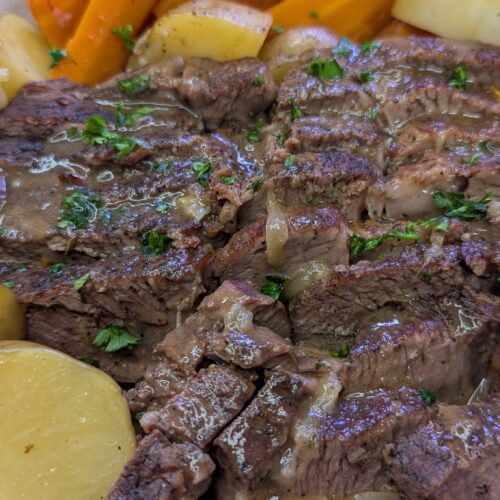
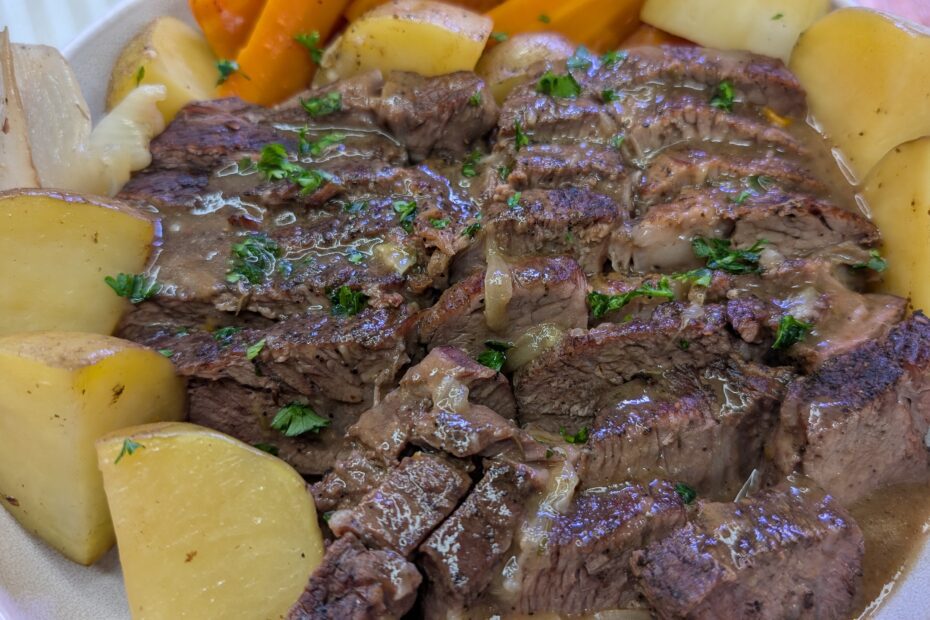
Yankee Pot Roast
Equipment
- Dutch Oven, Slow Cooker (with a tight-fitting lid) or Multi Cooker
- Normal Kitchen Utensils
Ingredients
- Required Ingredients
- 2 Lb Beef Chuck Roast
- 1 Lb Yukon Gold or Red Potatoes Eyes Removed, Cut Into 2-Inch Chunks
- 2-3 Medium Carrots Peeled and Cut Into 2-3 Inch Chunks
- 1 Medium Yellow or White Onion Peeled and Quartered
- 1 1/4 to 1 3/4 C Beef Stock Preferably Low Sodium; You can also sub broth, but the sauce will be a little thinner.
- 2 Tbsp All-Purpose Flour
- 1 1/2 Tbsp Vegetable Oil
- 1/2 tsp Dried Thyme Or 1 tsp Fresh
- 1 Bay Leaf
- Salt and Pepper to Taste
- (Optional) Extras
- 2 Ribs Celery Cut Into 2-Inch Chunks
- 1 Parsnip or Small Turnip Peeled and Cut Into 2-Inch Chunks
- 1/2 C Dry Red Wine Replace Equal Volume of Beef Stock Above If Using
- 1 Tbsp Tomato Paste
- 1 Tbsp Additional Flour For Thickening the Gravy
- 2 Cloves Garlic Peeled and Smashed
- 1 tsp Fresh Rosemary
- 2-3 Dashes Worcestershire Sauce
Instructions
- A few notes to start:1. I like to make this recipe with the required (authentic) ingredients, adding as many of the extra items as possible for additional layers of flavor. 2. You can make this recipe in a more classic way, using a Dutch oven, or the more modern way, using a slow cooker or multi cooker. The instructions for both follow…
- Heat the oil over medium-high/high heat in a Dutch oven, multi cooker, or (if using a slow cooker) skillet.1 1/2 Tbsp Vegetable Oil
- Season the beef evenly on all side with salt and pepper. At least 4-5 pinches of salt and pepper per side.2 Lb Beef Chuck Roast, Salt and Pepper to Taste
- Sear the beef in your hot pan on all sides, including the actual sides of the meat. 2-3 minutes per side to get some caramelization. Once seared, remove and set aside.
- Add the onions and carrots (and optional celery) to the same pan and cook 5-6 minutes, until slightly browned and softened. (If using the garlic, add it one minute before finishing this step.)2-3 Medium Carrots, 1 Medium Yellow or White Onion, 2 Ribs Celery, 2 Cloves Garlic
- Stir in the flour, coating the vegetables, and cook one minute.2 Tbsp All-Purpose Flour
- (If using the optional tomato paste, add it and cook an additional minute.)1 Tbsp Tomato Paste
- (If using wine, add it now to deglaze the pan. Cook and stir for 2-3 minutes to scrape up the fond and slightly reduce the wine.)1/2 C Dry Red Wine
- Add the beef stock, stirring to deglaze any remaining fond in the pan. (Use more stock for more sauce). Check for salt and pepper – don't fully season it, because you will need to reduce it later, but make sure it is at least lightly seasoned for now. The seasoning you put in the sauce now (along with the salt and pepper on the beef) will help season the meat and vegetables.1 1/4 to 1 3/4 C Beef Stock
- At this point, if you are using a slow cooker, move the vegetable mixture to the slow cooker, being careful to scrape as much sauce and bits from the skillet as possible. If using the Dutch oven, preheat your oven to 325 degrees F.
- Add the bay leaf, thyme (and optional Worcestershire sauce and rosemary). Return the beef to the pot, along with any drippings.1/2 tsp Dried Thyme, 1 Bay Leaf, 2-3 Dashes Worcestershire Sauce, 1 tsp Fresh Rosemary
- Cover the pot tightly.
- For the Dutch Oven, place, covered, into your oven for 1.5 to 2 hours.For the slow cooker and multi cooker, set to slow-cook on high for 4-5 hours.
- After this initial cooking period, add your potatoes and (optional) parsnip or turnip. Re-cover.1 Lb Yukon Gold or Red Potatoes, 1 Parsnip or Small Turnip
- For the Dutch Oven, roast another 1 to 1.5 hours, until the meat is tender and falling apart. For the slow cooker and multi cooker, set to slow-cook on high for another 4-5 hours. Again, until the meat is tender and falling apart. Note: If you are doing this as a set it and forget it type slow cooker meal, you can throw the potatoes and (optional) parsnip/turnip in at the beginning and simply set the cooker to high for 8-10 hours. Adding them halfway just helps them maintain some structure.
- To finish the meal, remove the roast and veggies from the pot and into a serving dish. Let the roast rest 10-15 minutes before slicing or breaking apart.
- Keeping the sauce in the pot, heat it over medium-high heat (if using a slow cooker, pour the sauce into a pot over medium-high heat). Cook to reduce and thicken while the roast rests. Note: You can choose to skim the fat off during this step as well. You can also thicken the sauce further by mixing in a slurry of 1 Tbsp Flour and 2 Tbsp water (maybe not authentic, but I like it). Once reduced, season the sauce with salt and pepper.1 Tbsp Additional Flour
- Serve the roast in slices or chunks, with the veggies, covered with the sauce.
🍖 Warm, Cozy, and Timeless: Why I Love This Yankee Pot Roast Recipe
This Yankee pot roast recipe has become a staple in my kitchen for good reason. It’s the perfect one-pot meal: simple, hearty, and full of rich, slow-cooked flavor. I usually make the 2 lb version at home — ideal for 3 to 4 people with some delicious leftovers for the next day.
The recipe features classic New England ingredients that any Yankee cook would recognize: chuck roast, onion, carrot, thyme, bay leaf, and beef stock. I’ve also included optional flavor boosters like garlic, tomato paste, and Worcestershire sauce. These extras add depth but aren’t necessary to keep the recipe authentic and true to its roots.
You can choose from three cooking methods: the traditional Dutch oven, slow cooker, or multi-pot slow cook setting. Each method brings out the same tender, savory flavors—just pick whichever fits your schedule and equipment.
🥔 Why Yukon Gold and Red Potatoes Work Best in Yankee Pot Roast
You might notice this recipe skips russet potatoes—and that’s intentional. Russets tend to break down during long cooking times and can cloud the broth. For a pot roast, you want potatoes that hold their shape while soaking up all that savory goodness.
That’s why I recommend Yukon Gold or red potatoes. These waxy potatoes maintain their texture through hours of braising. Yukon Golds add a buttery richness that complements the roast perfectly, while red potatoes add a beautiful pop of color to your plate.
🐄 A Dish with Deep New England Roots: The History of Yankee Pot Roast
The Yankee pot roast has deep roots in 19th-century New England, where home cooks transformed affordable beef chuck into a tender, flavorful meal through slow cooking. The dish likely evolved from traditional boiled dinners—another Yankee favorite where beef simmered alongside root vegetables like potatoes, carrots, turnips, and sometimes cabbage.
Over time, the Yankee pot roast became its own classic: meat seared for flavor, then slowly braised with simple aromatics and seasonal vegetables. The name “Yankee pot roast” began appearing in cookbooks and newspapers from the 1870s through the 1890s.
The term “Yankee” referred nationally to New Englanders of English descent, distinguishing this style from Southern pot roasts or German sauerbraten. Today, it remains a budget-friendly, comforting dish closely tied to New England’s culinary tradition.
👩🍳 Make This Pot Roast Your Own (and What to Serve With It)
What I love most about this Yankee pot roast recipe is its versatility. Want to keep it traditional? Stick with the basic ingredients. Craving more flavor? Add tomato paste or Worcestershire sauce to enhance the richness.
Looking for perfect sides? My crack mashed potatoes are buttery, creamy, and addictive—an ideal pairing. Or if you want to try a twist, check out my Mississippi pot roast recipe for a spicy, tangy change of pace.
This recipe is all about comfort, tradition, and unforgettable flavor. However you make it, your Yankee pot roast will taste like home.
I wrote and edited this post with help from ChatGPT, based on my own tested recipe and original photography.
Spot on with this write-up, I really think this web site needs much more consideration. I’ll in all probability be once more to read way more, thanks for that info.