
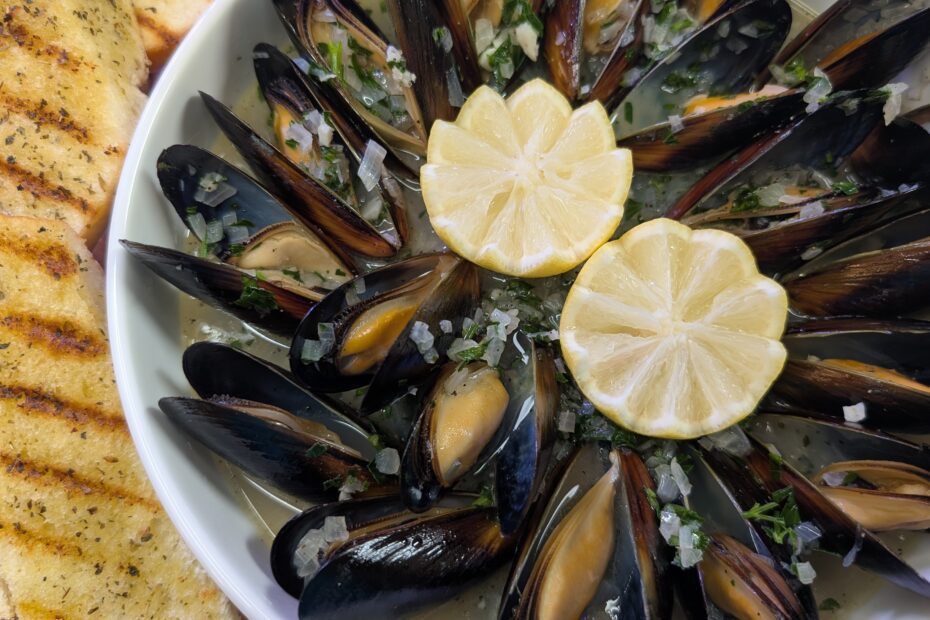
A Classic Dish from Coastal France


Moules Marinières (Mussels in White Wine)
Equipment
- Normal Kitchen Utensils
Ingredients
- 1 Lb Mussels in the Shell Live mussels are authentic, but frozen mussels are a great substitution
- 1/2 C Clam Juice or Seafood Stock If using frozen mussels
- 1 tsp Olive Oil
- 1 Tbsp Butter
- 1 Small Shallot, Finely Chopped
- 1 Clove Garlic, Minced
- 1/2 C Dry White Wine Like Pinot Grigio, Muscadet (very traditional) or Sauvignon Blanc
- 1 Tbsp Fresh Parsley, Chopped
- Salt and Pepper to Taste
- Crusty Bread for Serving
Optional Additions
- 1 Tbsp Cream (Optional); this basically makes it Moules Marinières à la Crème
- Lemon Wedges for Garnish
- 1 Whole Bay Leaf
- 2-3 Sprigs Fresh Thyme Or 1/2 tsp Dried Thyme
Instructions
- Prep the Mussels:If using fresh mussels, scrub the shells and remove the beards. Discard any cracked or open mussels that don't close when tapped.If using frozen mussels, you can basically take them straight from the bag. No need to thaw. Just make sure they are clean.1 Lb Mussels in the Shell
- Heat the olive oil and butter in a pot over medium heat.1 tsp Olive Oil, 1 Tbsp Butter
- Add the shallot with a pinch of salt and cook, stirring occasionally, for 2 minutes.1 Small Shallot, Finely Chopped, Salt and Pepper to Taste
- Stir in the garlic and cook another 30 seconds. If using the (optional) bay leaf and/or thyme, add it here.1 Clove Garlic, Minced, 1 Whole Bay Leaf, 2-3 Sprigs Fresh Thyme
- Add the wine and bring to a simmer. If using frozen mussels, add the clam juice or seafood stock here.1/2 C Dry White Wine, 1/2 C Clam Juice or Seafood Stock
- Add your mussels to the pot, cover and steam for 5-7 minutes, until fully cooked/heated through.Important: discard any mussels that remain closed after steaming. Note: Per the USDA, Cook fish and shellfish to 145°F/63°C
- Cut the heat and stir in the parsley and (optional) cream. Season with salt and pepper to taste.1 Tbsp Fresh Parsley, Chopped, 1 Tbsp Cream
- Serve right away with crusty bread, to dip in the broth, and maybe a lemon wedge or two.Lemon Wedges for Garnish, Crusty Bread for Serving
Notes
Always handle and cook animal products safely.
- Cook poultry (chicken, turkey, duck) to 165°F / 74°C.
- Cook ground meats (beef, pork, lamb, veal) to 160°F / 71°C.
- Cook whole cuts of beef, pork, lamb, veal to 145°F / 63°C and allow to rest for 3 minutes.
- Cook fish and shellfish to 145°F / 63°C.
- Eggs should be cooked until yolks and whites are firm, or use pasteurized eggs for recipes calling for raw or lightly cooked eggs.
Mussels in White Wine: The Story Behind Moules Marinières
Moules Marinières feels rustic and elegant at the same time. It has simple ingredients, bold flavor, and a long history tied to the western coast of France. The name “Moules Marinières” translates to “sailor-style mussels” in English. The word marinière refers to the sea and to dishes cooked in a coastal, sailor-inspired way. That usually means white wine, garlic, herbs, and fresh seafood. The dish most likely began in the coastal regions of Normandy and Brittany, where mussels grow wild on rocky shores. The exact creator is unknown, but fishermen cooked mussels in wine and herbs as early as the 18th century, long before the method appeared in French cookbooks. They used wine from the region, garlic, shallots, herbs, and mussels they pulled straight from the shore. That same simple method is still what makes this dish great today.
What to Serve with Moules Marinières
People usually serve mussels in white wine with crusty bread or a mound of hot, crispy fries. In Belgium, the pairing of mussels and fries even has a name: moules-frites. The broth makes the meal special. The mussels steam in white wine, butter, garlic, and herbs, and the liquid turns into a silky sauce. Bread soaks up every drop. Fries taste even better when they sit next to the bowl and catch a little broth. You can also serve the mussels with white rice or a simple salad, but bread and fries feel the most traditional.
A Few Fun Facts About Mussels
Mussels offer a lot of flavor for very little cost. One pound of fresh mussels usually yields 3–4 ounces of meat, but those few ounces provide a big punch of protein. People often search “How much protein is in mussels?” The answer is about 20 grams per three-ounce serving. Mussels are also high in minerals, low in fat, and very sustainable. They grow on ropes or rocks in clean water and do not need feed, which makes them one of the most eco-friendly seafoods you can buy.
Fresh vs. Frozen Mussels (and Why I Give Both Options)
Fresh mussels are the classic choice for Moules Marinières. But not everyone has a seafood market close by, and that is where frozen mussels help. Frozen mussels cook fast, cost less, and need almost no prep. My recipe includes notes on how to substitute frozen mussels, how to adjust the broth, and how to work around the fact that frozen mussels do not release liquid during cooking. Using frozen mussels is not authentic, but it makes this dish easier for weeknights and gives you the same garlic-and-white-wine flavor.
How to Clean Mussels Like a Pro
If you choose fresh mussels, cleaning them takes only a few minutes. Rinse them in cold water, scrub off grit, and remove the “beard,” which looks like small threads at the hinge. Fresh mussels should close when tapped. If one stays open, toss it. After cooking, discard mussels that do not open. This quick prep keeps the flavor clean and bright.
If you enjoy this dish, try my Mussel Pasta with Garlic Butter and White Wine for another fast, budget-friendly seafood meal. For another classic seafood dish, my copycat Galatoire’s Shrimp Remoulade adds a classic New Orleans touch to your table.
This post was written and edited with help from ChatGPT, based on my own tested recipe and original photography.